
Time Saving Remediation in Secondary ELA

“Yay, state testing time”… said no teacher ever! In my first year in the classroom, I received a humongous packet of “resources” that was labeled “Countdown to the FCAT (our old state test).” I also received a clear scope and sequence of when each “passage” should be read in class, aligned questions, and a reminder that using the materials was a requirement. As a new teacher, I didn’t see the harm, and assumed they’d help my students out. Wrong.
“Drill and Kill” not only hurt my class culture, but drained the joy out of reading.
We read 25 different passages with the intent of students getting better at reading, and demonstrating growth on their state assessment scores. The impact was a classroom full of young readers who viewed reading as a task chalked full of disconnected dots. So I wondered:
How can I make reading remediation a meaningful part of class that doesn’t drain the joy of reading, and assists students with becoming better readers?
No.easy.task. That said, below is my approach. I fully recognize that some school districts have systems in place that require teachers to use scripted programs. I hope teachers can glean something from this posts that works for them! Happy Reading!!!!!!!!
Start with AUTHENTIC TEXTS! Students deserve texts that are engaging, appropriate, and at their reading level. Below is a “mini”student anthology (for reading literature) I created for my students. After you have your texts, move on to the key questions.


1) What skills do students need assistance with? Remediation starts with knowing what your students need.

2) What type of practice do students need? In my opinion, practice for students should be twofold. First, students need opportunities to practice with items that are similar to questions on assessments. Second, assessment questions should be blended with opportunities that inform teachers of where student learning broke down. In my practice, there are scaffolded questions that allow students to explain their thinking using graphic organizers.
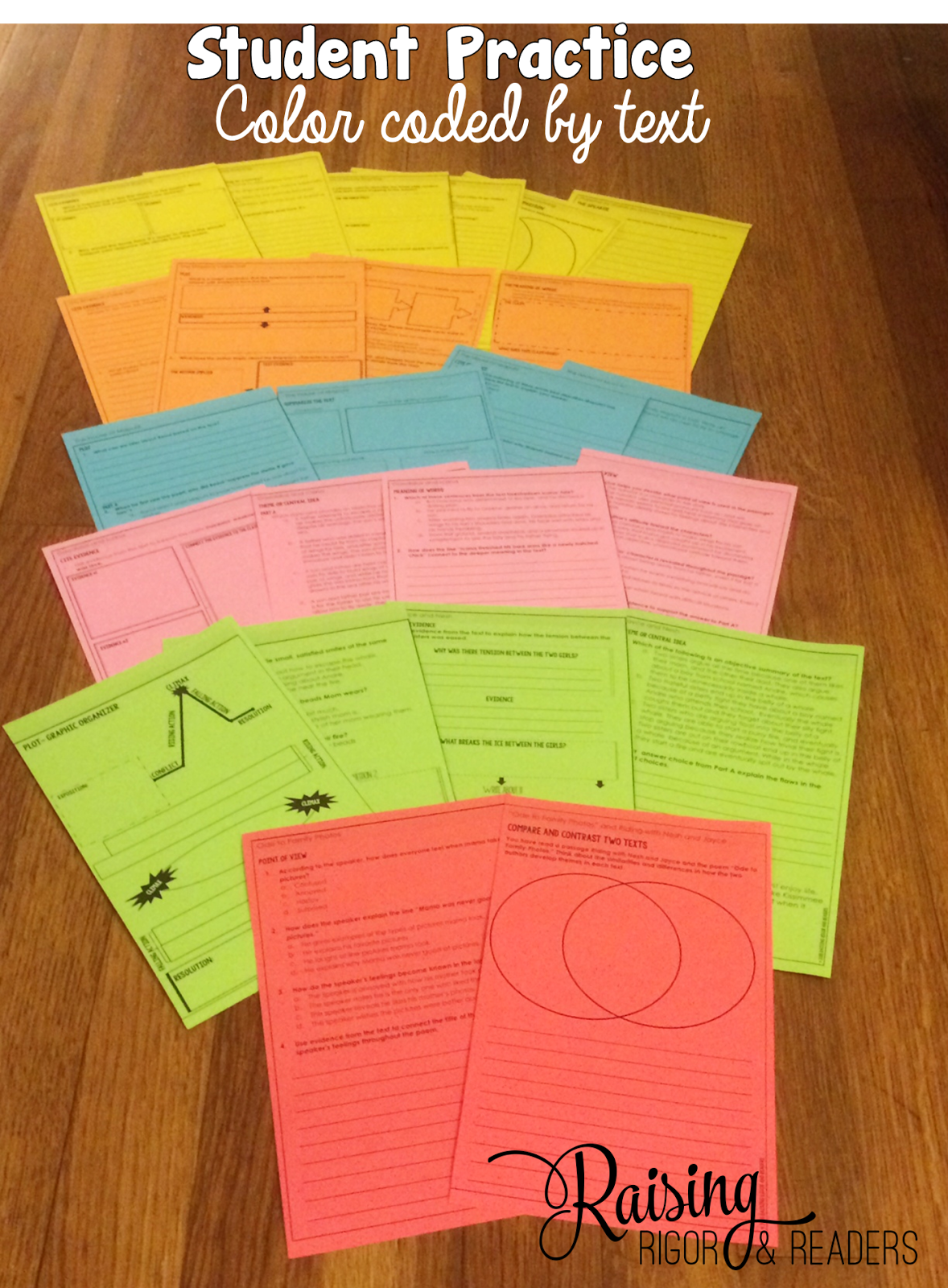

3) How can students assist one another in building reading comprehension? There is real power in students pushing each other in conversations about the text. Set students up to come prepared to engage in text based discussions by assigning questions, or activities. Click {here} for a starter pack to teach students about collaborative conversations.

4) What other activities will allow students to deeply engage with the text, and “show what they know?” Giving students other opportunities to process the text allows students to demonstrate comprehension in different ways, while fostering creativity. Some ideas include:
- Graphic Organizers
- Creative Writing (e.g. change the ending of the text, write yourself into the a part of the story)
- Interview a Character
- Turn the text into a Comic Strip
Well, that’s what I have. Hope something is helpful. The one thing I didn’t mention, but implied, is that students reread the texts in the anthology over and over again. There is no end to how many times you can pull one of the texts, and use it to guide students through different skills. Additionally, teachers do not have scurry around to find texts and questions for standards. The student anthology can be found {here} for free. I’m working on posting my informational text anthology, and an additional reading literature anthology. If you are interested in the activities in this post, click {here}

Need more test prep resources? Click here.


